
Category: Article

  • Circular economy is a way to responsible business. Where is the best place to start?

    Circular economy is a way to responsible business. Where is the best place to start?

    In today’s world, where our natural resources are being increasingly exploited, inevitably leading to their depletion, and environmental pollution is on the rise, we need to change our approach to the economy. The answer is the increasingly popular model of the circular economy.

    What is a circular economy?

    The circular economy is an approach in which products are designed and used in a sustainable manner, thus minimizing waste and using resources more efficiently. Unlike the traditional linear model of the economy, where raw materials are extracted, processed into products, and then discarded after use, the circular economy aims to close the material cycle to minimize waste and use resources more efficiently.

    Why is it so important for the life cycle of objects, materials, or products to remain closed?

    The most obvious reason is to minimize the amount of waste. We should start by using our resources more efficiently and then subjecting them to appropriate recycling. This reduces greenhouse gas emissions and limits the amount of waste that ends up in landfills or pollutes the air and water. According to the World Health Organization, approximately 2.01 billion tons of waste are produced worldwide each year. The number is huge, and what is most alarming is that it continues to grow. It is estimated that by 2050, the amount of waste could increase by as much as 70%.

    Acting according to the circular economy allows for an increase in the efficiency of resource utilization. This reduces the costs associated with the purchase of raw materials and waste, as well as the costs of their storage and transportation.

    Equally important, the circular economy promotes the development of innovative technologies and products. Promoting repair and reuse of products after use, as well as designing products with recycling in mind, requires the use of modern solutions and technological processes. Thanks to this, the circular economy contributes to increased competitiveness and employment.
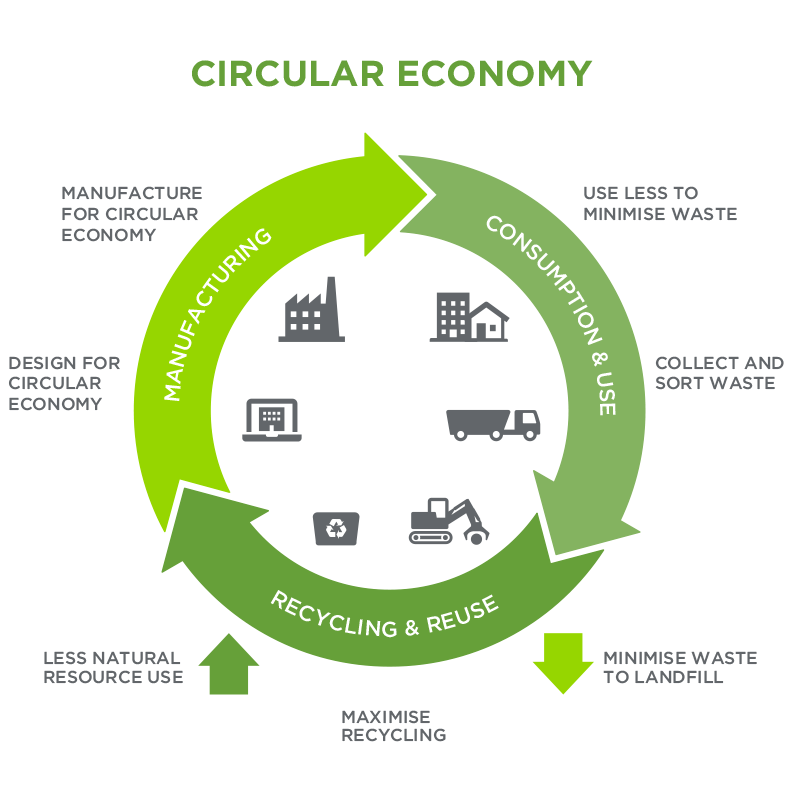
    source: https://www.futurerecycling.com.au/sustainability/circular-economy/

    The main principles of action consistent with the circular economy

    1. Minimizing waste and using resources more efficiently: Designing products with reuse in mind, as well as promoting repair and reuse of products after use.

    2. Introduction of sustainable development principles: In the circular economy, sustainable development principles are key. This means that resources and materials are used in a way that does not exceed the natural ability of ecosystems to regenerate and also minimizes negative impact on the environment.

    3. Encouraging cooperation between stakeholders: In the circular economy, cooperation between various stakeholders such as producers, suppliers, customers, service technicians, and recycling companies is important. This cooperation allows for the creation of a closed cycle in which products are reused, and waste is minimized.

    How does subscription fit into the principles of the circular economy?

    The prevailing consumerism results in the market being flooded with billions of products, whose lifecycle manufacturers are unable to control. The shift in thinking that will lead us to limit the number of items we purchase is revolutionary and not everyone is on board with it.

    Subscription is a compromise between our desire to have and to be (having the ability to use devices or items that may not be essential to us, but significantly affect our comfort of life, while not adding another brick to the destruction of the environment).

    Instead of buying products that will be discarded after use, a subscription allows access to them for a certain period of time, after which they are returned to the manufacturer or the subscription company. This gives them the opportunity for regular servicing and refurbishing of devices, significantly extending their lifespan and enabling them to be reused by multiple subsequent customers.

    In the traditional linear economy model, producers must acquire new resources to produce new products. Subscription, on the other hand, favors more efficient resource utilization. It is precisely because they can be reintroduced to the market, rather than acquiring new resources for the production of new ones.
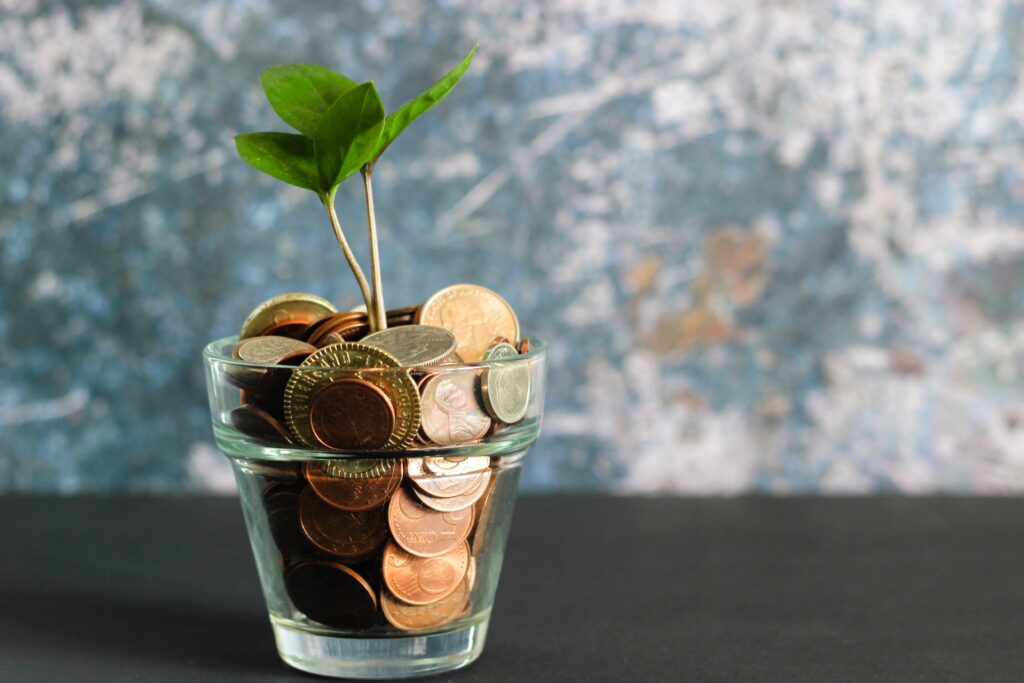
    What small steps can we take to bring our company one step closer to operating in line with the circular economy?

    Transforming your business in accordance with the principles of the circular economy is a long process that requires systematic work and significant changes. However, there are actions that we can start taking right away.

    1. Implementation of item subscriptions that we produce or distribute. WeSub offers free tools that enable the addition of a subscription as a payment method to the standard purchase offer.

    2. Appropriate emphasis on the service of offered devices, offering additional insurance, regular servicing, and ensuring high-quality spare parts can significantly extend the product’s lifecycle, so let’s encourage customers to use our additional services.

    3. Introduce items with a longer lifespan, good quality raw materials from which the item is made, along with the ability to exchange individual parts, will allow for maximum use of the device before its disposal.

    4. Minimizing waste by reducing the amount of paper used, using e-invoices, or ceasing to use disposable products are the smallest steps we can take. Let’s also make sure to use eco-friendly packaging for shipments.

    We don’t have to take all these steps at once, but it’s worth taking care of the business awareness that the need to change our linear economy to a circular one is real and requires attention here and now. The sooner we join this revolution, the more time we will have to adapt properly.
  • We’ve Surpassed 20 Million Euros in Subscriptions. This Is Just the Beginning – A Conversation with Mariusz, CEO of WeSub

    We’ve Surpassed 20 Million Euros in Subscriptions. This Is Just the Beginning – A Conversation with Mariusz, CEO of WeSub

    The past few months have been exceptional for WeSub. We have more than one reason to celebrate.

    Not long ago, we were celebrating surpassing 10,000 completed transactions. Then came our fourth anniversary, and now we’ve hit another milestone: the total value of equipment under subscription has exceeded 20 million euros. These aren’t just numbers – they represent real companies, real needs, and a shift in the way technology is perceived in business. This moment felt like the perfect opportunity to talk to Mariusz Szałagan, founder and CEO of WeSub – about the beginnings, the future, and why subscription isn’t just a trend but a lasting change.

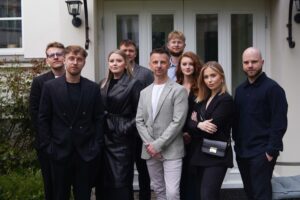
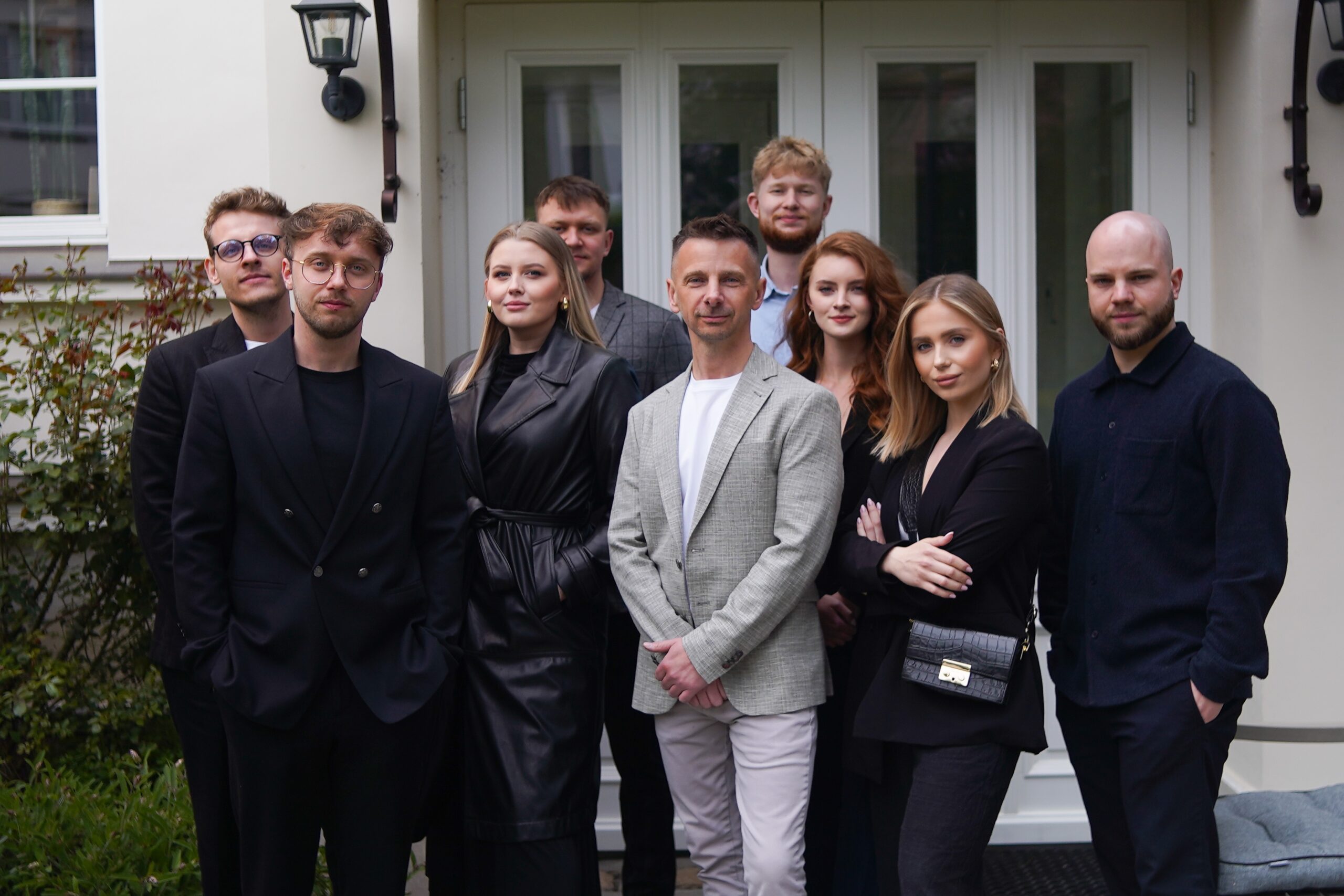
    zdjecie pracowników firmy Wesub wraz z Mariuszem Szłaganem CEO świętujących 4 urodziny firmy

    Mariusz, do you remember when the idea for WeSub was born?

    Yes, very clearly. It all started from personal frustration – we wanted access to great equipment without having to go through complicated financial paperwork. That was in late 2018. We were inspired by the American market, where subscriptions were growing several times faster than traditional sales. We thought, “why not here?” In Poland, flexible access to many products was missing – and that was the spark.

    What were the early days like? What did you feel when you saw the first “rented” item?

    It was like seeing your own product on a shelf – only this one was in use, in motion. Every new “first time” – first laptop subscription, first ten contracts per month, first coffee machine, one thousand contracts a month – reinforced our belief that this model made sense. These were the moments that truly built confidence in the scalability of the whole venture.

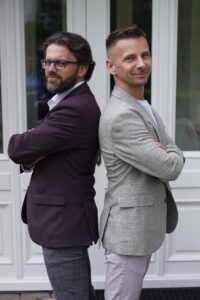
    Mariusz Szałagan i Sebastian Kuk Wesub

    What was the hardest part at the beginning?

    At first, we were a niche. 9.5 out of 10 people said “no, thanks.” That “.5” was someone who didn’t run away immediately but listened. We had to build the market from scratch – educate, explain, inspire. Today, 3 out of 10 listen to us, and the rest are warming up. This is thanks to changing consumer habits – and our persistence.

    Today you’re celebrating 20 million euros. What does that number mean to you?

    It’s a clear signal that the subscription model has been embraced. Clients no longer necessarily want to own – they prefer to use. And we hit the mark with an offer that meets that need. For us, it’s proof that the real growth is still ahead. Subscription is no longer a curiosity – it’s the new standard for modern technology use.

    Is it just laptops and phones that come to you?

    Definitely not. From classic laptops and coffee machines to EMS devices, massage chairs, beauty and gastronomy equipment. We often hear the question: “can this be subscribed too?” If it works, is premium, and makes sense from a usage standpoint – the answer is usually “yes.”

    Why is subscription the future?

    Because we prefer convenience. We don’t want to worry about what to do when something breaks, how to insure it, how to finance it. You pay, use, and swap. Technology evolves fast – ownership just can’t keep up. Subscription is the natural response to that pace.

    How do companies respond?

    They’ve changed their mindset. Many businesses today don’t want to buy equipment “forever.” They need it for a specific project, for a month, six months. Leasing takes too long. Buying is too expensive. Subscription offers flexibility and better budget control – it’s a real competitive advantage.

    Where do you see further growth?


    In Poland, we aim to capture 5% of the consumer electronics market – that’s at least PLN 2.5 billion annually. But we also see huge potential in industries like beauty, medical, and gastronomy. We’re already active in France and Switzerland. Our goal is to become the subscription leader in Europe – and we’re well on our way.


    And the team? What makes you proudest?

    How many people who started here with no experience are now making key decisions. Because they treat the company like their own. And they’re not afraid of constructive conflict. It shows we’ve built a healthy culture – bold, responsible, and open to change.

    Do you have a leadership principle?

    Listening – to people, clients, and partners. Flexibility – because the market changes daily. And humility – you have to have the courage to admit you don’t know something. Only then can you truly learn.

    Where do you draw your energy from?

    I have a ritual – I go running every morning at 5 a.m. It’s my time to organize thoughts and plans. What drives me is the awareness that we’re in the middle of a transformation. Just like car leasing was once innovative and is now the norm – the same will happen with electronics. I want to be part of that change.

    What has leading WeSub taught you?

    That mission and vision aren’t empty phrases. In a dynamic environment, you need a compass – values and direction. Even if the road is winding – you need to know where you’re heading.

    What would your perfect day look like in five years?

    A morning run, coffee, reports from several countries. And then – entering a new market where no one has yet introduced the subscription model. I’d like WeSub to be associated with quality, scale, and the courage to blaze new trails.

    And finally – what would you say to yourself before launching WeSub?

    Aim high from the start. Trust people. And don’t fear risk – it’s the only path to playing big. Better to make a few mistakes than miss your chance.

    Today, WeSub has over 20 million euros worth of equipment that’s transforming how companies work and grow – in Poland and abroad – through subscription. But this is only the beginning. Our ambition is not only to scale the model but to set new standards – flexible, convenient, and future-focused. Because the future is about using, not owning. And we’re building it right now.